RupAnuga

Login or Sign Up
Donate
Share App
Language
English
Volunteer
Contact Us
Credits

Volunteer With Us

Join our mission to spread Krishna consciousness

Your email app will open with a pre-filled form. Complete the details and send it to us.

Welcome Back

Login to continue your spiritual journey

Create Account

Step 1 of 3

Reset Password

We'll send you an OTP

Profile

@

Joined on January 1970
Email
Phone
Not set
Birthday
Not set

Contact Us

How can we help you?

themsconexion@gmail.com
We typically respond within 24-48 hours

Credits & Acknowledgments

Thank you

Music & Kirtans

All devotional music courtesy of ISKCON Desire Tree

Daily Darshan Images

ISKCON Mayapur

Content Removal Request

If you own any content displayed in this app and would like it removed, please contact us immediately.
Log Out?

You'll need to log back in to access your sadhana and profile.

Devotee

Quotes

Quiz

Calendar

Darshan

Daily Shloka

Contribute

Help keep the app running!

Support Now
Ekadashi

Rate Us

Love the app? Leave us a rating!

Rate Now

Share App

Spread devotion with others!

Share Now

Join 10K+ Devotees

Track your sadhana and unlock all features

Sadhana Sharing

Track Your Sadhana

Login to track your daily spiritual practices and maintain your progress

Chanting

0
rounds today
Leaderboard

Login to see your rank

Detailed Analytics
0
Today's Rounds
0
Lifetime Rounds
0:00
Average Time
-
Weekly Rank
Total Rounds
0:00
Tap to Start
[calendar]

Kirtan

All Songs
Playlists
Singers
Acharyas

Recently Listened

Most Popular

For You

All Music
0 songs
My Favorites
0 songs

Playlists

Artists

Search

Featured Artists

Top Charts

New Releases

Browse All

Devotional

Bhajans & Kirtans

Meditation

Peaceful Chants

All Artists

Browse by Singer

Playlists

Curated Collections

My Favorites

Your Liked Songs

Downloads

Offline Listening

Downloads
0 songs • 0 MB

Acharyas

Success

Operation completed successfully

Select a song
Vaishnava Bhajan
0:00 0:00
Share Song
Sign In

Sign in to save and sync your songs

Appearance
Credits & About
Send Feedback
Share App
Get RupAnuga App
Download from Play Store

Appearance

Automatic
Match system settings
Light
Always use light mode
Dark
Always use dark mode

Today's Quote

Browse by Month

Swipe to see more
ŚB 1.3.28

एते चांशकला: पुंस: कृष्णस्तु भगवान् स्वयम् ।
इन्द्रारिव्याकुलं लोकं मृडयन्ति युगे युगे ॥ २८ ॥

ete cāṁśa-kalāḥ puṁsaḥ
kṛṣṇas tu bhagavān svayam
indrāri-vyākulaṁ lokaṁ
mṛḍayanti yuge yuge

ete — all these; ca — and; aṁśa — plenary portions; kalāḥ — portions of the plenary portions; puṁsaḥ — of the Supreme; kṛṣṇaḥ — Lord Kṛṣṇa; tu — but; bhagavān — the Personality of Godhead; svayam — in person; indra-ari — the enemies of Indra; vyākulam — disturbed; lokam — all the planets; mṛḍayanti — gives protection; yuge yuge — in different ages.

All of the above-mentioned incarnations are either plenary portions or portions of the plenary portions of the Lord, but Lord Śrī Kṛṣṇa is the original Personality of Godhead. All of them appear on planets whenever there is a disturbance created by the atheists. The Lord incarnates to protect the theists.
In this particular stanza Lord Śrī Kṛṣṇa, the Personality of Godhead, is distinguished from other incarnations. He is counted amongst the avatāras (incarnations) because out of His causeless mercy the Lord descends from His transcendental abode. Avatāra means “one who descends.” All the incarnations of the Lord, including the Lord Himself, descend to the different planets of the material world as also in different species of life to fulfill particular missions. Sometimes He comes Himself, and sometimes His different plenary portions or parts of the plenary portions, or His differentiated portions directly or indirectly empowered by Him, descend to this material world to execute certain specific functions. Originally the Lord is full of all opulences, all prowess, all fame, all beauty, all knowledge and all renunciation. When they are partly manifested through the plenary portions or parts of the plenary portions, it should be noted that certain manifestations of His different powers are required for those particular functions. When in the room small electric bulbs are displayed, it does not mean that the electric powerhouse is limited by the small bulbs. The same powerhouse can supply power to operate large-scale industrial dynamos with greater volts. Similarly, the incarnations of the Lord display limited powers because so much power is needed at that particular time.

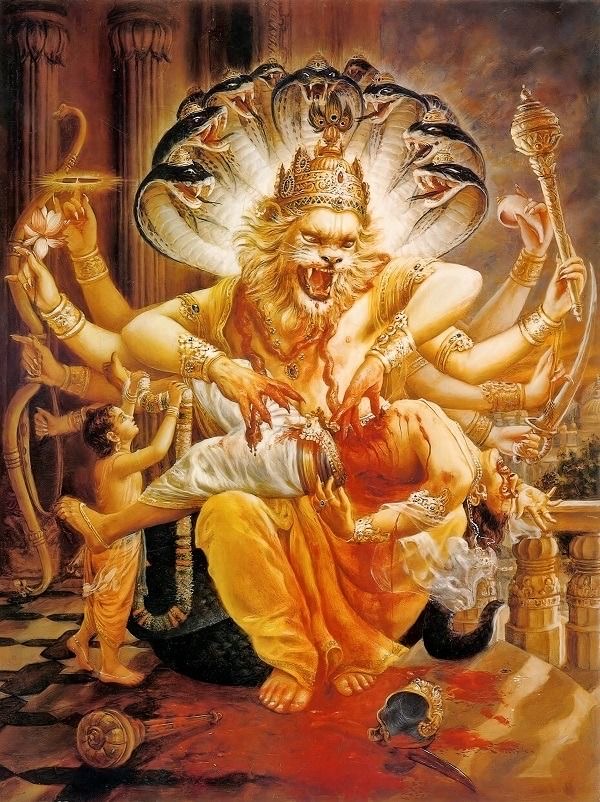
For example, Lord Paraśurāma and Lord Nṛsiṁha displayed unusual opulence by killing the disobedient kṣatriyas twenty-one times and killing the greatly powerful atheist Hiraṇyakaśipu. Hiraṇyakaśipu was so powerful that even the demigods in other planets would tremble simply by the unfavorable raising of his eyebrow. The demigods in the higher level of material existence many, many times excel the most well-to-do human beings in duration of life, beauty, wealth, paraphernalia and all other respects. Still they were afraid of Hiraṇyakaśipu. Thus we can simply imagine how powerful Hiraṇyakaśipu was in this material world. But even Hiraṇyakaśipu was cut into small pieces by the nails of Lord Nṛsiṁha. This means that anyone materially powerful cannot stand the strength of the Lord’s nails. Similarly, Jāmadagnya displayed the Lord’s power to kill all the disobedient kings powerfully situated in their respective states. The Lord’s empowered incarnation Nārada and plenary incarnation Varāha, as well as indirectly empowered Lord Buddha, created faith in the mass of people. The incarnations of Rāma and Dhanvantari displayed His fame, and Balarāma, Mohinī and Vāmana exhibited His beauty. Dattātreya, Matsya, Kumāra and Kapila exhibited His transcendental knowledge. Nara and Nārāyaṇa Ṛṣis exhibited His renunciation. So all the different indirectly or directly empowered incarnations of the Lord manifested different features, but Lord Kṛṣṇa, the primeval Lord, exhibited the complete features of Godhead, and thus it is confirmed that He is the source of all other incarnations. And the most extraordinary feature exhibited by Lord Śrī Kṛṣṇa was His internal energetic manifestation of His pastimes with the cowherd girls. His pastimes with the gopīs are all displays of transcendental existence, bliss and knowledge, although these are manifested apparently as sex love. The specific attraction of His pastimes with the gopīs should never be misunderstood. The Bhāgavatam relates these transcendental pastimes in the Tenth Canto. And in order to reach the position to understand the transcendental nature of Lord Kṛṣṇa’s pastimes with the gopīs, the Bhāgavatam promotes the student gradually in nine other cantos.

According to Śrīla Jīva Gosvāmī’s statement, in accordance with authoritative sources, Lord Kṛṣṇa is the source of all other incarnations. It is not that Lord Kṛṣṇa has any source of incarnation. All the symptoms of the Supreme Truth in full are present in the person of Lord Śrī Kṛṣṇa, and in the Bhagavad-gītā the Lord emphatically declares that there is no truth greater than or equal to Himself. In this stanza the word svayam is particularly mentioned to confirm that Lord Kṛṣṇa has no other source than Himself. Although in other places the incarnations are described as bhagavān because of their specific functions, nowhere are they declared to be the Supreme Personality. In this stanza the word svayam signifies the supremacy as the summum bonum.

The summum bonum Kṛṣṇa is one without a second. He Himself has expanded Himself in various parts, portions and particles as svayaṁ-rūpa, svayam-prakāśa, tad-ekātmā, prābhava, vaibhava, vilāsa, avatāra, āveśa, and jīvas, all provided with innumerable energies just suitable to the respective persons and personalities. Learned scholars in transcendental subjects have carefully analyzed the summum bonum Kṛṣṇa to have sixty-four principal attributes. All the expansions or categories of the Lord possess only some percentages of these attributes. But Śrī Kṛṣṇa is the possessor of the attributes cent percent. And His personal expansions such as svayam-prakāśa and tad-ekātmā, up to the categories of the avatāras who are all viṣṇu-tattva, possess up to ninety-three percent of these transcendental attributes. Lord Śiva, who is neither avatāra nor āveśa nor in between them, possesses almost eighty-four percent of the attributes. But the jīvas, or the individual living beings in different statuses of life, possess up to the limit of seventy-eight percent of the attributes. In the conditioned state of material existence, the living being possesses these attributes in very minute quantity, varying in terms of the pious life of the living being. The most perfect of living beings is Brahmā, the supreme administrator of one universe. He possesses seventy-eight percent of the attributes in full. All other demigods have the same attributes in less quantity, whereas human beings possess the attributes in very minute quantity. The standard of perfection for a human being is to develop the attributes up to seventy-eight percent in full. The living being can never possess attributes like Śiva, Viṣṇu or Lord Kṛṣṇa. A living being can become godly by developing the seventy-eight-percent transcendental attributes in fullness, but he can never become a God like Śiva, Viṣṇu or Kṛṣṇa. He can become a Brahmā in due course. The godly living beings who are all residents of the planets in the spiritual sky are eternal associates of God in different spiritual planets called Hari-dhāma and Maheśa-dhāma. The abode of Lord Kṛṣṇa above all spiritual planets is called Kṛṣṇaloka or Goloka Vṛndāvana, and the perfected living being, by developing seventy-eight percent of the above attributes in fullness, can enter the planet of Kṛṣṇaloka after leaving the present material body.

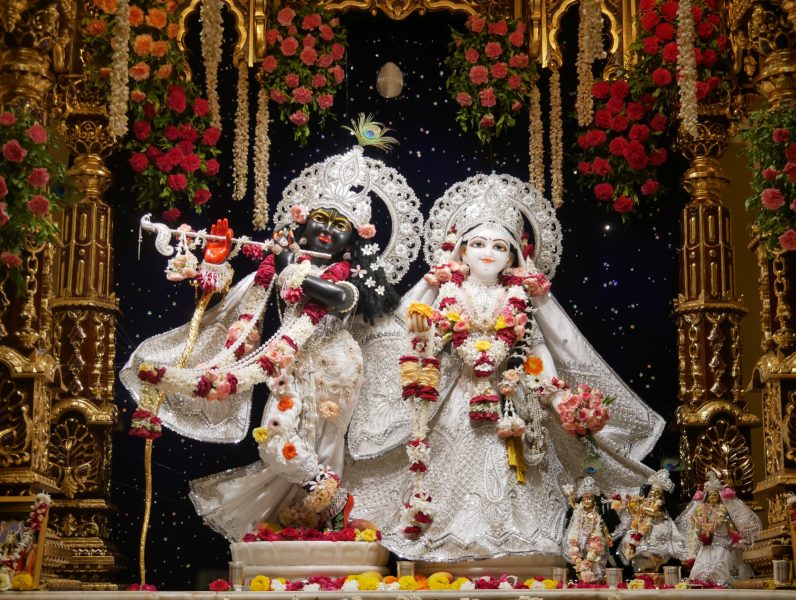
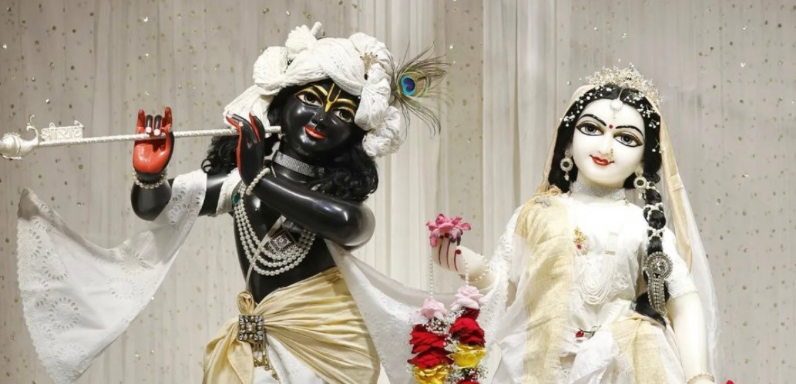
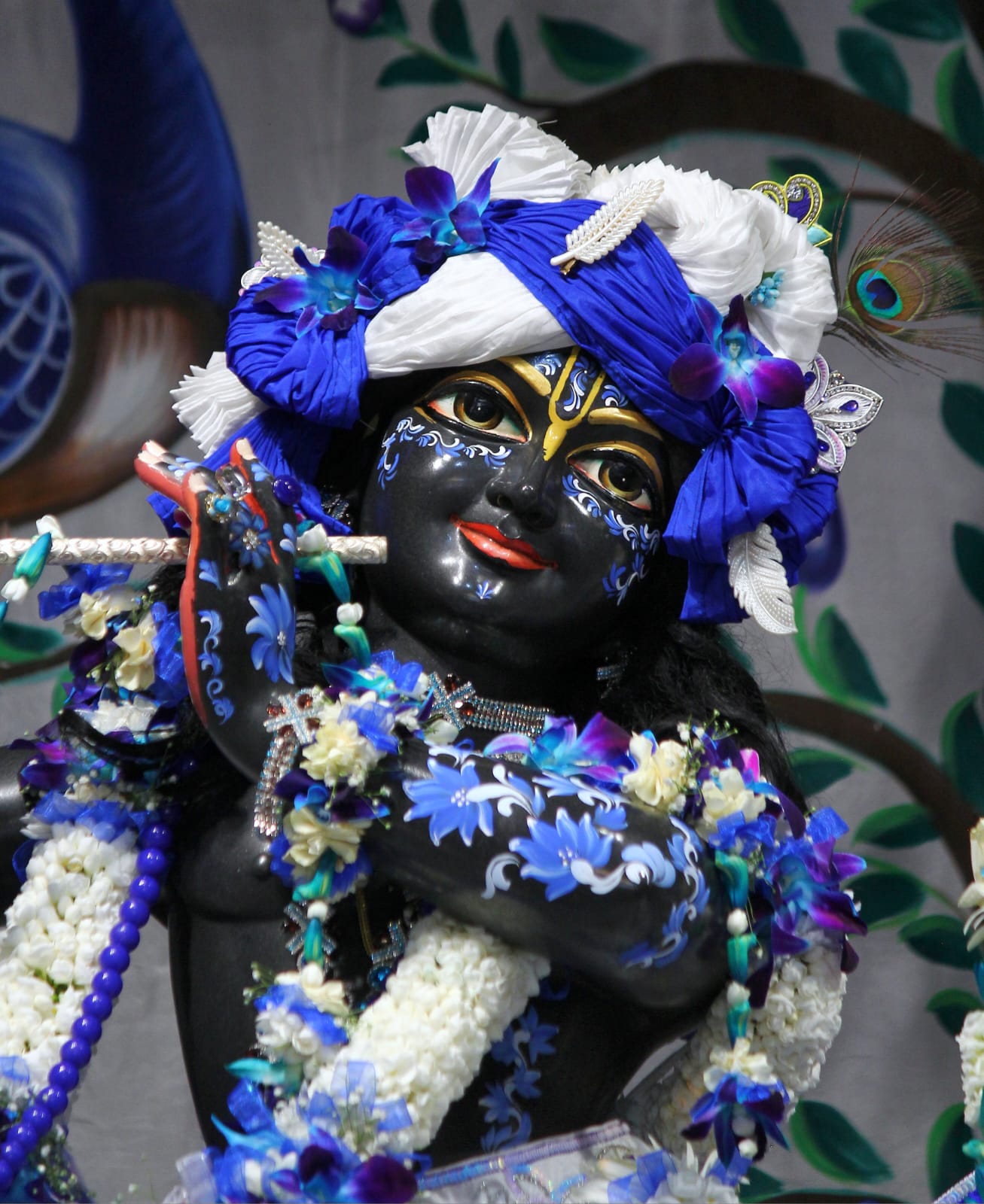
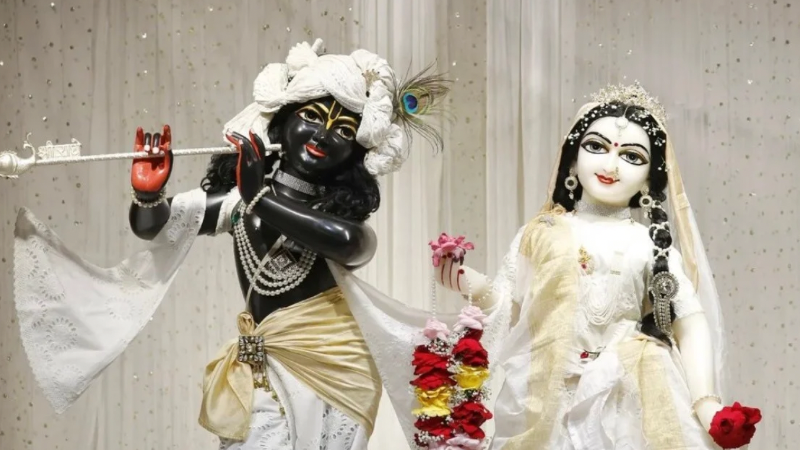
Daily Darshan

Govindam Adipurusham
Yamuna Mataji
Darshan
1 / 1
Vaishnava Calendar
November 2025
S
M
T
W
T
F
S
← Swipe to change months →
Today
Menu
Search Events
Select Location
Jump to Date
Event Details
[ai]
Quiz
Points
More Quiz
Loading…
Leaderboard
Loading…

Chat with Sadhak AI

Login to ask spiritual questions & get authentic answers
RupAnuga

Login or Sign Up
Donate
Share App
Language
English
Volunteer
Contact Us
Credits